How to Get the Transcript of Any YouTube Video: The Complete Guide
Learn how to get, copy and clean a YouTube transcript, remove timestamps, handle missing transcripts and use a free YouTube transcript generator.
If you want the transcript of a YouTube video, there are usually two practical options:
- Use YouTube's built-in transcript feature, if the video has one available.
- Use a YouTube transcript generator to turn the video's spoken content into text you can copy, review, summarize, or reuse for legitimate research and content workflows.
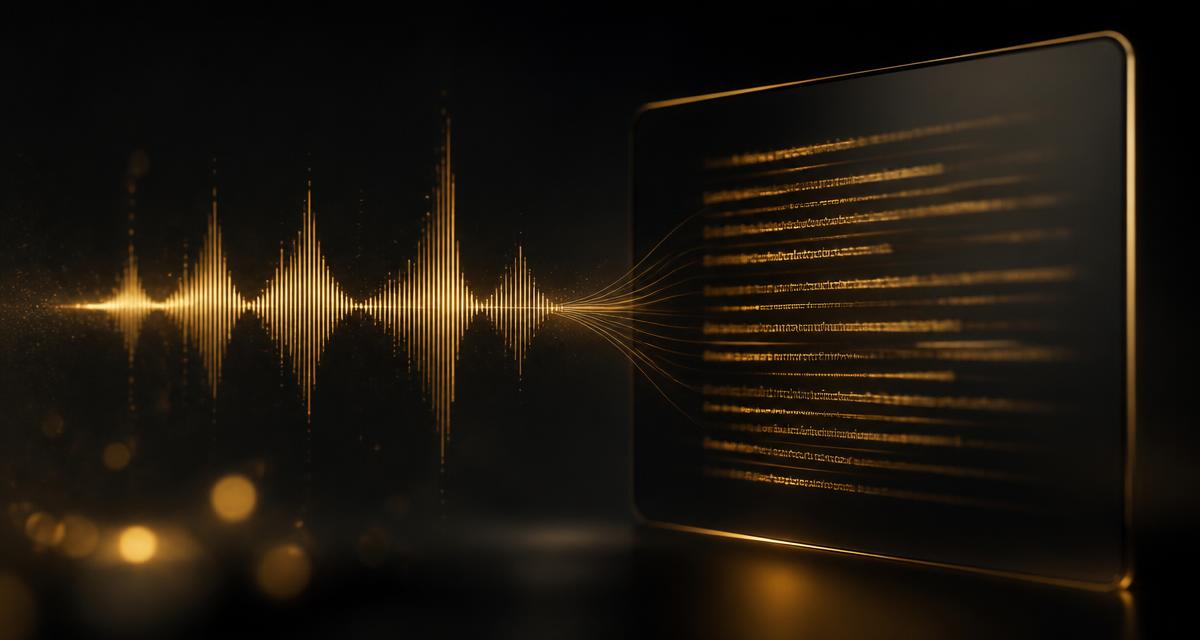
A YouTube transcript is simply the spoken content of a video converted into text. Depending on how it was created, the transcript may also include timestamps, speaker labels, captions, or automatically generated text.
People use transcripts for many reasons, including research, note-taking, study, accessibility, content analysis, summarization, and turning their own videos into other formats such as blog articles or newsletters.
This guide explains how to get a transcript from a YouTube video, how to clean and work with it, what to do when a transcript is unavailable, and how to use transcript text responsibly once you have it.
What Is a YouTube Transcript?
A YouTube transcript is a text version of the spoken words in a YouTube video.
For example, if a creator says:
"Today we're going to look at three reasons interest rates affect technology stocks."
the transcript may contain that sentence as plain text, sometimes alongside a timestamp such as:
0:12 Today we're going to look at three reasons interest rates affect technology stocks.
A transcript can come from:
- Captions uploaded by the creator
- Automatically generated captions
- Human-created subtitles
- A dedicated transcription tool
- Speech-to-text software
The exact formatting and accuracy can vary.
Some transcripts include timestamps on every line. Others provide clean paragraphs without timestamps.
How to Get a Transcript From a YouTube Video
The simplest method is to check whether YouTube already provides a transcript for the video.
Method 1: Use YouTube's Built-In Transcript
When a transcript is available, YouTube may allow you to view it directly alongside the video.
The exact interface can vary depending on device and YouTube's current layout, but the basic process is usually:
- Open the YouTube video.
- Look around the video description or additional options.
- Find the option to show the transcript.
- Open the transcript panel.
- Scroll through the transcript.
- Copy the sections you need.
You may see timestamps beside each line.
For example:
0:00 Welcome back to the channel 0:04 Today we're looking at... 0:09 The first thing to understand...
If you only need to read the transcript, that may be enough.
If you want to work with the text in another document, you may need to copy and clean it.
How to Copy a YouTube Transcript
If YouTube's transcript is available, you can usually select and copy the text into:
- Google Docs
- Microsoft Word
- Notion
- A note-taking app
- A research document
- An AI tool
- A script-writing workflow
The problem is that copied transcript text may contain:
- Timestamps
- Line breaks
- Repeated sentence fragments
- Caption formatting
- Speaker labels
That can make it difficult to read.
Example of Raw Transcript Text
0:00 today we're going to talk 0:02 about how interest rates 0:04 affect growth stocks and why 0:06 this matters for investors
A cleaned version would be:
Today we're going to talk about how interest rates affect growth stocks and why this matters for investors.
If the video is short, you can clean this manually.
For a one-hour interview or podcast, a transcript generator or AI-assisted cleanup workflow can save a lot of time.
How to Get a YouTube Transcript Without Timestamps
Many people searching for a transcript do not actually want caption formatting.
They want clean, readable text.
There are several ways to get a YouTube transcript without timestamps.
Option 1: Hide Timestamps Before Copying
If YouTube's transcript interface offers a timestamp display option, turn timestamps off before copying.
Availability can depend on the current YouTube interface.
Option 2: Remove Timestamps Manually
For a short transcript, you can delete timestamps after pasting the text into a document.
Option 3: Use a Transcript Generator
A dedicated transcript tool can provide a more convenient way to convert a YouTube video into usable text.
Narratora's Free YouTube Transcript Generator is one option for extracting the spoken content of a YouTube video so you can work with it as text.
This can be useful when your real goal is not simply reading captions, but doing something with the transcript afterward.
How to Use a Free YouTube Transcript Generator
A dedicated YouTube transcript generator is useful when you want a cleaner workflow than manually copying YouTube captions.
The typical process is:
- Copy the URL of the YouTube video.
- Open the transcript generator.
- Paste the video URL.
- Generate or retrieve the transcript.
- Review the text.
- Copy or use the transcript for your next task.
For example, you could use Narratora's Free YouTube Transcript Generator to turn a video into text, then use that text for research, study, summarization, or another legitimate workflow.
The important step is still reviewing the transcript.
Automatic transcription is useful, but it should not be assumed to be perfectly accurate.
YouTube Transcript Methods Compared
| Method | Best For | Main Advantage | Main Limitation |
|---|---|---|---|
| YouTube built-in transcript | Quick reading | No extra tool needed | Not available for every video |
| Copy and clean manually | Short videos | Simple and flexible | Tedious for long transcripts |
| Transcript generator | Longer videos and reusable text | Faster, cleaner workflow | Output still needs review |
| Manual transcription | High-accuracy specialist work | Full control | Very time-consuming |
For most everyday research and content workflows, the built-in transcript or a transcript generator will be the most practical starting point.
How to Work With YouTube Transcript Timestamps
Timestamps can be extremely useful depending on what you plan to do with the transcript.
Suppose you are researching a 90-minute interview.
A timestamped transcript might let you record notes such as:
18:42 Discussion of manufacturing costs 34:10 Comments about international expansion 56:27 Explanation of the new pricing strategy
This makes it much easier to return to the exact point in the original video.
Keep Timestamps When:
- Fact-checking
- Taking research notes
- Studying lectures
- Reviewing interviews
- Quoting or referencing a specific section
- Creating editing notes
- Building chapter markers
Remove Timestamps When:
- Creating a readable document
- Summarizing the video
- Building a study guide
- Organizing research notes
- Analyzing the overall argument
- Using the text as source material for your own content
You can also keep two versions:
Research version: timestamped
Working version: clean text
That gives you readability while preserving the ability to trace important information back to the original video.
What If a YouTube Transcript Is Unavailable?
Not every YouTube video will have an accessible transcript.
There are several possible reasons.
The creator may not have provided captions.
Automatic captions may not be available.
The audio may be difficult to transcribe.
The video may contain very little spoken dialogue.
Language support or platform settings may also affect availability.
If YouTube does not show a transcript, a dedicated transcription tool may still be able to help depending on the video and audio.
If transcription still fails, your options may include:
- Taking notes manually while watching
- Using speech-to-text software
- Working from available subtitles
- Transcribing only the specific section you need
For important material, manual review may still be necessary even after automatic transcription.
Why Automatic YouTube Transcripts Contain Errors
Speech recognition has improved significantly, but automatic transcription can still make mistakes.
The most common errors tend to involve material that is difficult to infer from sound alone.
Accents and Pronunciation
Different accents, dialects, speech patterns, and pronunciations can affect transcription.
A word that is obvious to a human familiar with the speaker may be interpreted incorrectly by an automatic system.
Names
Names are particularly vulnerable.
For example:
"Satya Nadella"
could be incorrectly transcribed if the system does not recognize the name from context.
This also applies to:
- Company names
- Brand names
- Places
- Historical figures
- Product names
Always verify names when they matter.
Technical Terminology
Specialized vocabulary can cause errors in subjects such as:
- Medicine
- Law
- Finance
- Engineering
- Science
- Software
- Filmmaking
For example, an industry-specific acronym might be interpreted as an ordinary word.
Background Noise
Traffic, music, crowd noise, wind, poor microphones, or sound effects can interfere with speech recognition.
Overlapping Speakers
Interviews, podcasts, panel discussions, and debates often contain people speaking over one another.
Automatic systems may:
- Merge sentences
- Miss words
- Attribute words incorrectly
- Produce fragmented text
Fast or Unclear Speech
Rapid speech, mumbling, unfinished sentences, and interruptions can all reduce transcript quality.
Always Check Important Information Against the Original Video
A transcript is a useful representation of spoken content.
It is not automatically a perfect record.
If accuracy matters, return to the video.
This is particularly important for:
- Numbers
- Dates
- Quotes
- Names
- Financial information
- Legal information
- Medical information
- Scientific claims
- Technical instructions
Imagine a speaker says:
"Revenue increased 13.5 percent."
but the transcript says:
"Revenue increased 30.5 percent."
That small transcription error completely changes the meaning.
For research-heavy work, timestamps make verification much easier.
How to Clean a YouTube Transcript
A raw transcript is often easier to use after cleanup.
A useful cleanup process might include:
1. Remove Timestamps
Delete timestamps unless you need them for referencing the original video.
2. Rebuild Paragraphs
Automatic captions often create a new line every few words.
Combine those fragments into readable paragraphs.
3. Fix Obvious Transcription Errors
Correct:
- Names
- Numbers
- Technical terms
- Brand names
- Repeated words
Only make corrections you can verify.
4. Remove Caption Artifacts
You may encounter items such as:
[Music]
[Applause]
[Laughter]
Keep them only if they matter to your purpose.
5. Separate Speakers
For interviews, labeling speakers can make the transcript easier to understand.
For example:
Interviewer: What changed after the launch?
Guest: The biggest change was customer demand.
6. Preserve the Original Meaning
Cleaning should improve readability.
It should not change what the person actually said.
Common Uses for YouTube Transcripts
Getting the text is often only the beginning.
Once you have a clean YouTube video transcript, you can use it in many legitimate ways.
Summarize a Long YouTube Video
A one-hour interview can be difficult to review quickly.
A transcript makes it easier to identify:
- Main ideas
- Key arguments
- Important examples
- Conclusions
- Action items
This is especially helpful when deciding whether you need to watch the entire video in detail.
A future guide on summarizing YouTube videos with AI can go deeper into this workflow.
Create an Executive Brief
If a video contains business or professional information, the transcript can be converted into a short structured brief.
For example:
Video: 75-minute industry conference discussion
Executive Brief:
- Key developments
- Strategic implications
- Risks
- Important statistics
- Recommended follow-up
This is often more useful than repeatedly searching through the full recording.
Create a Study Guide
Students can turn lectures, educational videos, and presentations into:
- Chapter summaries
- Key terms
- Definitions
- Review questions
- Flashcard prompts
- Study notes
The transcript provides the source material.
The study guide reorganizes it for learning.
Research a Topic Faster
Imagine researching artificial intelligence infrastructure.
You find five expert interviews, each more than 45 minutes long.
Transcripts let you search for terms such as:
- Data centers
- GPUs
- Electricity
- Capital expenditure
- Inference
- Supply constraints
You can then jump directly to the most relevant sections.
This can dramatically improve the efficiency of video-based research without replacing the need to check the original source.
Turn Useful Information Into Notes
A transcript can be turned into structured notes such as:
Main argument
Supporting evidence
Important examples
Questions to investigate
Claims requiring verification
Possible sources to find
That is usually more useful for research than keeping the entire raw transcript.
Turn Transcript Research Into an Original YouTube Script
A transcript can also become research material for your own video.
A responsible workflow is:
YouTube Video ↓ Transcript ↓ Extract Useful Facts and Ideas ↓ Verify and Supplement Research ↓ Develop Your Own Angle ↓ Create an Original Script
The important part is transformation.
Do not simply take another creator's transcript and paraphrase it line by line.
Use the transcript as research, combine it with other sources where appropriate, develop a distinct argument, and write an original script.
A related guide on turning transcripts into original YouTube scripts can explore that process in depth.
Turn Your Own Videos Into Blog Articles or Newsletters
If you own the source content, a transcript can help you repurpose your work efficiently.
For example:
Original YouTube Video
could become:
Blog Article: More detailed written explanation
Newsletter: Condensed insight for subscribers
Study Guide: Educational breakdown
Executive Brief: Business summary
Social Content: Short extracted ideas
Narratora's broader source-driven workflow is built around this idea:
Source → Intelligence → Workflow → Professional Output
In practical terms, the transcript becomes a source that can support different outputs.
The goal should not be to publish the exact same content everywhere.
Each format should be adapted for its audience and purpose.
Using a YouTube Transcript With AI
Once you have extracted a transcript, AI can help you work with the text more efficiently.
For example, you could ask it to:
- Summarize the main points
- Identify recurring themes
- Extract key facts
- Organize notes
- Create study questions
- Identify claims requiring verification
- Compare several transcripts
- Build an outline
- Develop a research brief
The quality of the result still depends on the transcript and the task.
If the transcript contains errors, an AI system may repeat or amplify them.
That is another reason to check important information against the original video.
Responsible Use of YouTube Transcripts
Being able to access or extract a transcript does not transfer ownership of the underlying content.
The video, script, narration, and other creative elements may still be protected by copyright.
Legitimate uses may include:
- Personal study
- Research
- Note-taking
- Accessibility
- Analysis
- Fact-finding
- Working with your own content
- Creating original, transformative work where appropriate
Avoid treating someone else's transcript as free source material that can simply be republished.
In particular, extracting another creator's transcript and changing a few words does not automatically make the resulting work original.
If you are creating new content from research, develop your own:
- Angle
- Structure
- Analysis
- Examples
- Commentary
- Conclusions
The transcript should inform the work rather than become the work.
YouTube Transcript Workflow: A Practical Example
Suppose you find a 60-minute interview with an entrepreneur discussing the collapse of a startup.
You want to research the topic.
Step 1: Get the Transcript
Use YouTube's transcript feature or a transcript generator.
Step 2: Search for Relevant Topics
You identify sections discussing:
- Fundraising
- Hiring
- Revenue
- Customer churn
- Cash flow
Step 3: Keep Timestamps
You note:
17:32 Fundraising strategy 28:14 Revenue problems 41:07 Customer churn 52:18 Final cash crisis
Step 4: Verify Important Claims
You check:
- Company filings
- News reports
- Public financial information
- Other interviews
Step 5: Create Research Notes
Instead of keeping the full transcript, you organize:
Main cause identified by founder: Expansion happened too quickly.
Supporting evidence: Hiring increased before revenue stabilized.
Counterpoint: Other reports suggest customer acquisition costs were already problematic.
Step 6: Develop Your Own Output
You could now create:
"Why Fast-Growing Startups Run Out of Cash"
The original interview has become one research source within a much broader piece of original analysis.
That is a far more valuable use of a transcript than simply rewriting what the interviewee said.
Frequently Asked Questions
How Do I Get a Transcript From a YouTube Video?
Open the YouTube video and check whether YouTube provides a transcript option.
If available, open the transcript panel and copy the text you need.
You can also use a dedicated YouTube transcript generator when you want a more convenient way to turn the video's spoken content into usable text.
Can I Copy a YouTube Transcript?
Yes, when the interface allows you to select the transcript text, you can copy it into a document or note-taking tool.
However, access to transcript text does not transfer copyright ownership of the original content.
Use transcripts responsibly for purposes such as research, study, accessibility, note-taking, analysis, or working with your own material.
Can I Get a YouTube Transcript Without Timestamps?
Yes.
You may be able to hide timestamps before copying, remove them after copying, or use a transcript generator that produces cleaner text.
For research, consider keeping a separate timestamped copy so important information can be traced back to the video.
Why Doesn't a YouTube Video Have a Transcript?
Possible reasons include unavailable captions, unsupported audio, creator settings, language limitations, difficult audio, or the absence of sufficient spoken content.
A separate transcription tool may still be able to help, although results depend on audio quality and other factors.
Are YouTube Transcripts Accurate?
They can be useful, but they are not always perfectly accurate.
Names, numbers, accents, technical language, background noise, and overlapping speakers can all create errors.
Verify important information against the original video.
Can AI Summarize a YouTube Transcript?
Yes.
Once the video has been converted into text, AI can help summarize key points, identify themes, create notes, or organize information.
The summary is only as reliable as the underlying transcript and the AI's interpretation, so important facts should still be checked.
Is There a Free YouTube Transcript Generator?
Yes. Narratora offers a Free YouTube Transcript Generator that can help turn a YouTube video into text you can review and work with.
Final Takeaway
If you need the text from a YouTube video, start with the simplest method.
Check whether YouTube already provides a transcript.
If it does, you can view, copy, and clean the text.
If you need a more convenient workflow, especially for longer videos, a free YouTube transcript generator can help turn the spoken content into usable text.
Then decide what you actually need the transcript for.
You might:
- Read it
- Search it
- Summarize it
- Study it
- Create notes
- Research a topic
- Verify a claim
- Build a brief
- Work from your own video content
- Develop an original script using broader research
And whenever accuracy matters, return to the original video.
A transcript makes spoken content easier to work with.
It does not remove the need for verification, context, judgment, or responsible use.
Related Guides
Turn your sources into content like this
Narratora builds publish-ready scripts, briefs, and reports from your uploaded material.
Start Your 5-Day Trial — $1/Day